
Vandaris Autonomous strike · Hardware
Hardware startup · Prototype in flight test

Autonomous strike platforms built for cost asymmetry.

Expendable autonomous munitions that defeat drones, armor, and high-value targets at a fraction of their cost.

Vandaris is a defense hardware company building high-agility autonomous kinetic vehicles—for counter-UAS intercept and precision strike against tanks, armored vehicles, and other priority targets without legacy missile economics.

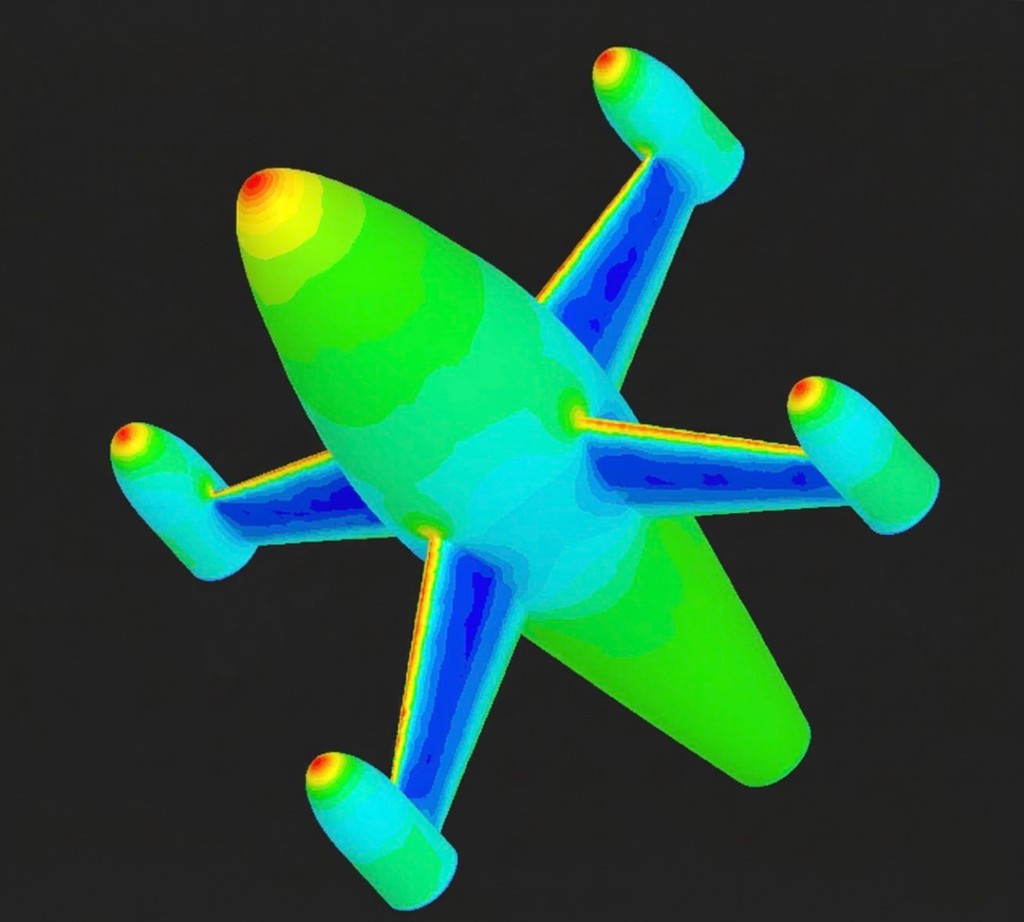
Strike vehicle · Gen 1 Interactive model

Loading prototype…

Drag · Scroll to zoom

Autonomous kinetic strike

DoD · primes · critical infra

Gen-1 prototype · flying

Technical founders · Ithaca, NY

Backed / engaged by Accelerator Grant program Design partners

The wrong economics win wars—and the wrong economics lose them.

Defenders cannot afford $3M missiles against $500 FPV drones. Attackers cannot afford to lose $5M tanks to waves of $50K autonomous strikers. In both directions, the side with favorable cost exchange wins.

Vandaris builds one autonomous kinetic architecture for air targets (hostile UAS) and surface targets (armor and high-value vehicles)—so operators can engage at volume, not ration shots.

01

Cost exchange

Legacy missiles and ATGMs cost orders of magnitude more than the assets you need to destroy—whether that’s a quadcopter or a main battle tank.

02

Autonomous terminal engagement

Manual kill chains are too slow for swarming UAS and too scarce for distributed anti-armor fires across a wide front.

03

Multi-target mission set

Operators need one expendable platform class for air defense and surface strike—not separate program lines for each threat type.

One integrated strike vehicle—not a kit of parts.

We own the airframe, autonomy, and terminal engagement end-to-end—configurable for counter-UAS intercept and kinetic strike against armored and high-value surface targets, built for high-volume manufacturing.

Mission & approach
A

Perception & targeting

GPS-denied image-based visual servoing (IBVS)—real-time pixel-error tracking and velocity command generation from onboard camera feeds.

B

Autonomous guidance

Closed-loop terminal guidance for intercept and strike profiles—air-to-air and air-to-surface—without continuous operator control per engagement.

C

Kinetic effector

High-agility expendable airframe for terminal engagement against maneuvering UAS and high-value ground vehicles.

Gen-1 design targets.

Engineering objectives for the Gen-1 airframe under active flight validation—stated as design targets, not yet qualified specifications.

90mph

Dash speed

12km

Engagement range

<90s

Launch to track

30Hz

Onboard control loop

One control loop, two perspectives.

The same visual-servoing loop, shown from the command picture and the seeker. Left: top-down intercept geometry—pursuit curve, field-of-view cone, and line of sight. Right: the onboard camera locking the target as pixel error drives to zero.

Vandaris IBVS · Engagement digital twin Closed loop @ 30 Hz
ACQUIRING
ΔX px
ΔY px
Error px
Range m
Closing m/s
Lock confidence 0%
Intercepts0 T+0

Proprietary HITL simulator · Command picture + seeker view · Shared telemetry bus

Current MVP architecture
Python / OpenCV on ARM64 — perception and IBVS control loop
Target deployment hardware
Raspberry Pi onboard flight controller · Pi Camera FPV feed
Field validation
HUD composited over real-world footage via ibvs_sim.py --video

The threat crossed a line. Defense procurement didn’t.

Cheap UAS swarms and autonomous anti-armor strike have reshaped both sides of the battlefield. Legacy programs still move on decade-long cycles—the gap is structural, and it favors teams that ship flight hardware on startup timelines.

What exists today

Gen-1 airframe

Designed, prototyped, and in active flight development.

IBVS control loop

Closed-loop pixel-error tracking and velocity commands—running in sim and on ARM64 hardware.

Iteration speed

Weekly build–fly–learn cycles—not multi-year design reviews.

Next milestone

Closed-loop autonomous terminal engagement—counter-UAS and anti-armor flight regimes.

Who pays—and why the budget is real

Counter-UAS

Intercept hostile drones and loitering threats at defender-favorable cost

Anti-armor strike

Kinetic defeat of tanks and armored vehicles without million-dollar munitions

High-value targets

Mobile command, logistics, and priority surface assets

Expeditionary fires

Low-footprint launch for forward units and distributed operations

A defense prime moves in years. We move in weeks.

  • Technical founders with depth in autonomy, aerodynamics, and flight hardware—not slideware.
  • Integrated product: one team ships airframe + software together.
  • Hardware-in-the-loop IBVS simulator tunes gains before every flight test cycle.

Closing the loop from autonomous track to terminal kinetic effects—counter-UAS and anti-armor—in operationally relevant flight regimes.

Engaging early government and industry partners to align requirements before scale production.

We’re building a billion-dollar defense company from first principles.

If you’re an investor or accelerator partner who backs technical founders solving hard physical-world problems—we’d like to talk.

Include a line on your background and what you’re looking for. We read every serious inbound.

angus@vandarisdefense.com