
Perception
GPS-denied vision research—pixel-error tracking from camera frames. Sim IBVS loop live on the autonomy page; Pi 5 bench for detection + Δx/Δy.
Platform concepts
This page documents the integrated platform research layer: Gen-1 airframe FEA concepts, simulation design parameters, SITL validation footage, and experimental progress. Parameters are design targets—not qualified field specifications.
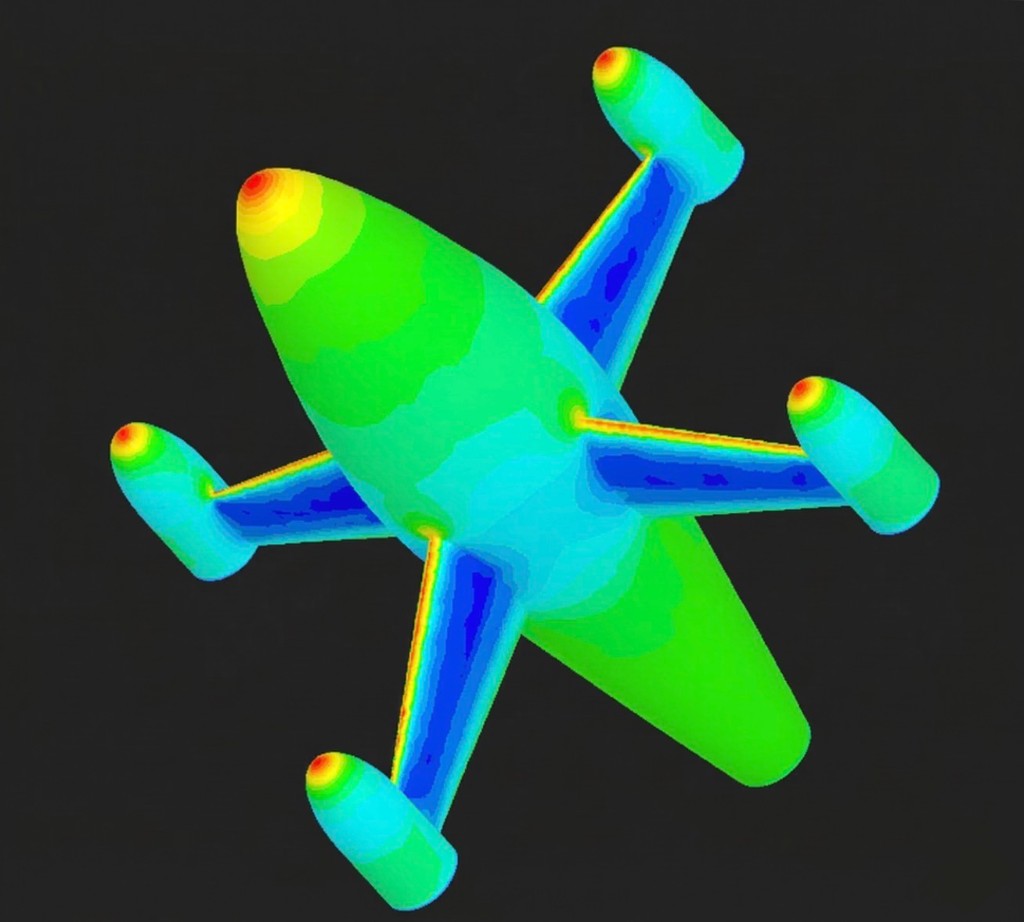
Structural study
A notional high-agility interceptor airframe studied in simulation—stress and load paths visualized for structural iteration against intercept-class loads.
FEA / concept render only—not field flight test. Interactive digital twin also on the autonomy page.
Integrated stack
Platform research spans perception, guidance, and closed-loop control in simulation—studying counter-UAS and ground-target tracking scenarios with notional airframe concepts for future academic publication.
Autonomy researchGPS-denied vision research—pixel-error tracking from camera frames. Sim IBVS loop live on the autonomy page; Pi 5 bench for detection + Δx/Δy.
Closed-loop terminal guidance for simulated intercept trajectories—aerial and ground-target scenarios—without continuous operator control per run.
Notional high-agility airframe model for closed-loop guidance simulation against maneuvering UAS and mobile ground-target trajectories.
Simulation design parameters
Notional parameters for simulation and academic research—stated as design targets, not qualified or field specifications.
90mph
Notional speed (sim)
12km
Notional range (sim)
<90s
Time to acquisition (sim)
~30Hz
Control loop design target
Progress
Airframe + twin
Gen-1 FEA here; interactive twin on Autonomy; 5" FPV built for Pi/camera mount.
Vision error pipeline
YOLO + bbox + Δx/Δy from frame center on Raspberry Pi 5. Sim IBVS loop for guidance research.
Iteration speed
Rapid iterative design via HITL / SITL simulation—not multi-year design reviews.
Next milestone
Map Δx/Δy → yaw/pitch (or body-rate) commands and close the loop on the 5" FPV.
Research methodology
Current focus
Closing the hardware loop from track error to motor commands—counter-UAS and ground-target scenarios—after the Pi vision pipeline is mounted on the airframe.
Open to technical discussions with operators, investors, and potential co-founders. Not selling hardware yet.